KLA Schools of Naperville
The 3sB class spent the entire school year investigating construction as part of their deeper study. As winter turned into spring, the children were introduced to bridges—wondering together about what bridges do, what makes them strong, and how they help people cross from one place to another. They explored real-world bridge structures through books, photographs, and hands-on modeling using clay, blocks, and wood. Their curiosity evolved into a collective question: Could they build a real bridge of their own?
During an April planning conversation between their teacher, Ms. Becca, and the school’s pedagogical coordinator, it was mentioned that the younger playground needed a new bridge. Rather than simply ordering one, the children were invited to become engineers themselves, applying what they had studied to solve a real problem for their school community. The class eagerly accepted the challenge, and what began as an idea soon became a meaningful, child-led design project.
Booklet Template
Working as engineers, the children sketched potential designs, drafted blueprints, and evaluated necessary building materials. They debated features such as flowers, handrails, ropes, or cement supports, and discussed weight, size, tools, and colors. Through these negotiations, they selected a footbridge design measuring 50 inches by 24 inches. For the children, drawing was no longer just art—it became communication, a way to express complex structural ideas and work collaboratively toward a shared goal.
On May 20, Ms. Meghan and her father purchased lumber, nails, and stain for the project and began preparing the parts. A measurement mistake led to unexpected opportunity: instead of one bridge, the cut wood would now yield two. What could have been viewed as an error instead deepened collaboration and excitement. The children’s ideas would not only serve one playground—but both outdoor classrooms.
Booklet Template
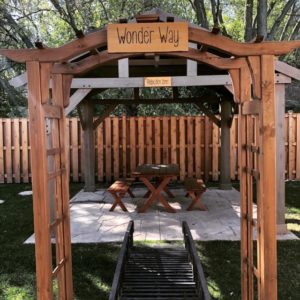
This joyful learning culminated in a community construction event on May 22. Families joined the children to assemble the bridges, using real tools with guidance from teachers who first reviewed safety practices. Parents and children worked side by side—drilling, holding beams steady, lining up planks, tightening screws, and checking stability. Once the bridges were complete, the children proudly tested their work by walking across them, laughing as they moved from one side to the other.
Not only did the bridges become lasting additions to the environment, but they also became symbols of what children can accomplish when their work is treated with seriousness, creativity, and respect. Now, every time young learners cross them—on both the infant/toddler and preschool playgrounds—they are walking on the ideas, measurements, drawings, conversations, and collaboration of the 3sB class and their families.
This project connected real-world engineering with community partnership and child-led research. Most importantly, it honored children as capable thinkers whose designs can shape the spaces they inhabit.
![]()
Learn more about this classroom on their certification page!